Practical ideas for wet boots, winter gear, and everyday storage in a mudroom or small entry.
Snowy boots, damp coats, grocery bags, and backpacks can all arrive through the same door. A useful mudroom gives everything a place without blocking the way into the house.
Start with how you enter the house and what comes with you. The right setup can be as simple as hooks, a boot tray, and a place to sit.
Start with the door you actually use
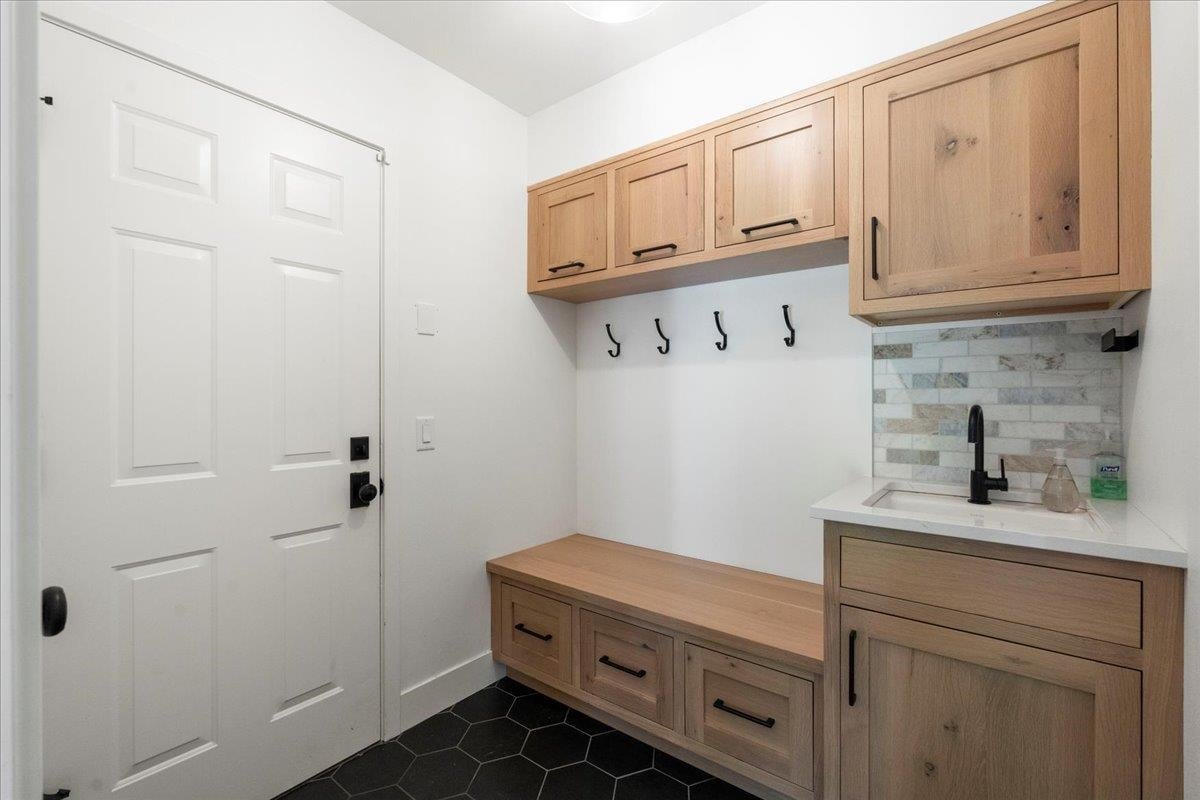
If you usually come through the garage, storage by the front door may not help with what piles up by the garage. Follow your regular route and notice where you naturally stop to remove shoes or set down bags.
Keep frequently used items along that route. A spot for keys, a dog leash, or a work bag is more useful when it’s easy to reach on your way out.
Give wet boots and gear a place to dry
Give wet gear room to dry before putting it away. Set snowy boots on a tray or mat suited to the flooring. Leave space between hanging coats, mittens, and snow pants rather than crowding wet layers onto one hook.
A boot tray can contain drips, but collected water still needs emptying. Follow the care instructions for drying footwear and clothing.
Keep dry shoes and bags away from the wet area so you don’t have to move them every time someone comes inside.
Make everyday storage easy to reach
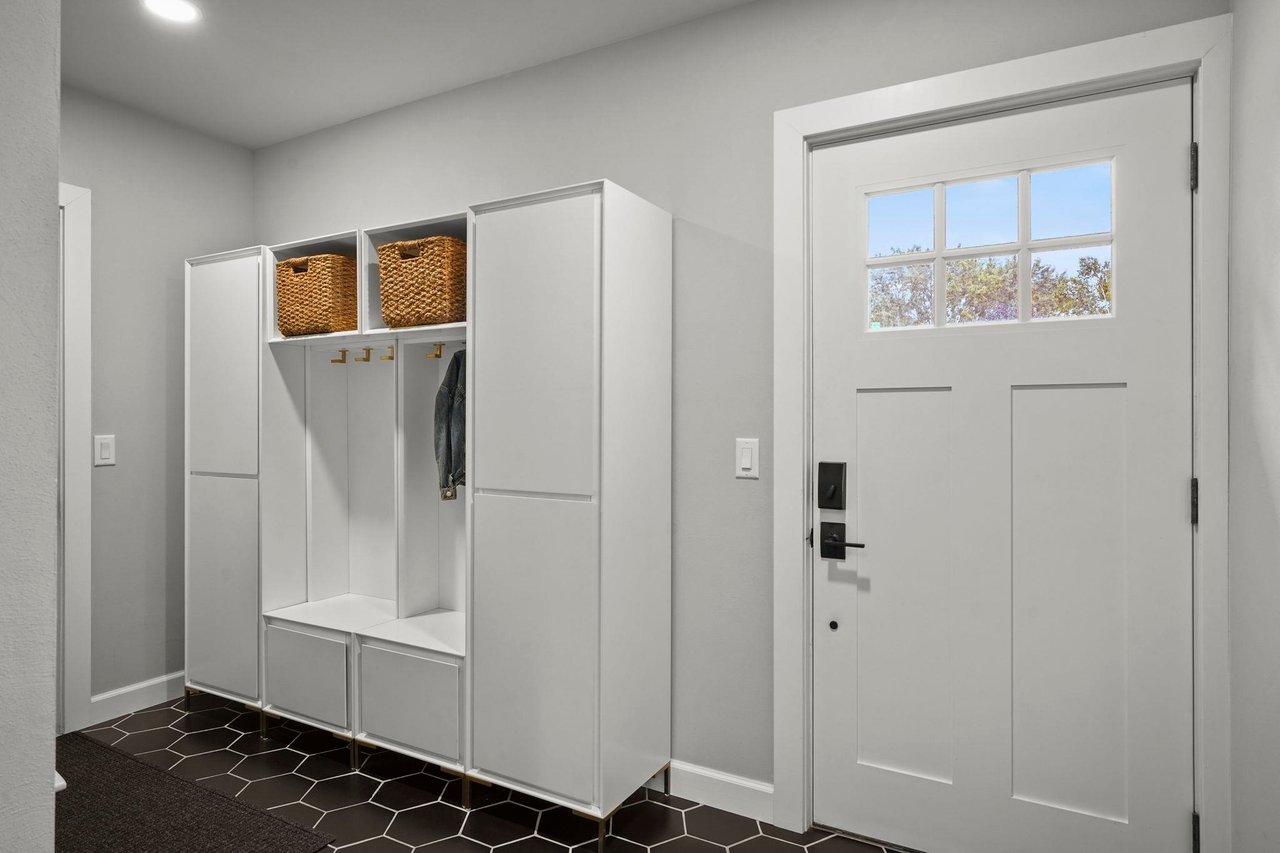
Hooks offer a quick place for coats and bags. Shelves or baskets can hold dry hats and gloves. Cabinets keep less-used items out of sight.
Choose a combination that suits your routine. If children use the space, place their everyday hooks and storage within reach. Give each person a clear spot so finding a pair of mittens doesn’t mean searching every basket.
Check the size of storage openings, too. A cubby that fits sneakers may not fit tall winter boots.
Leave room to come and go
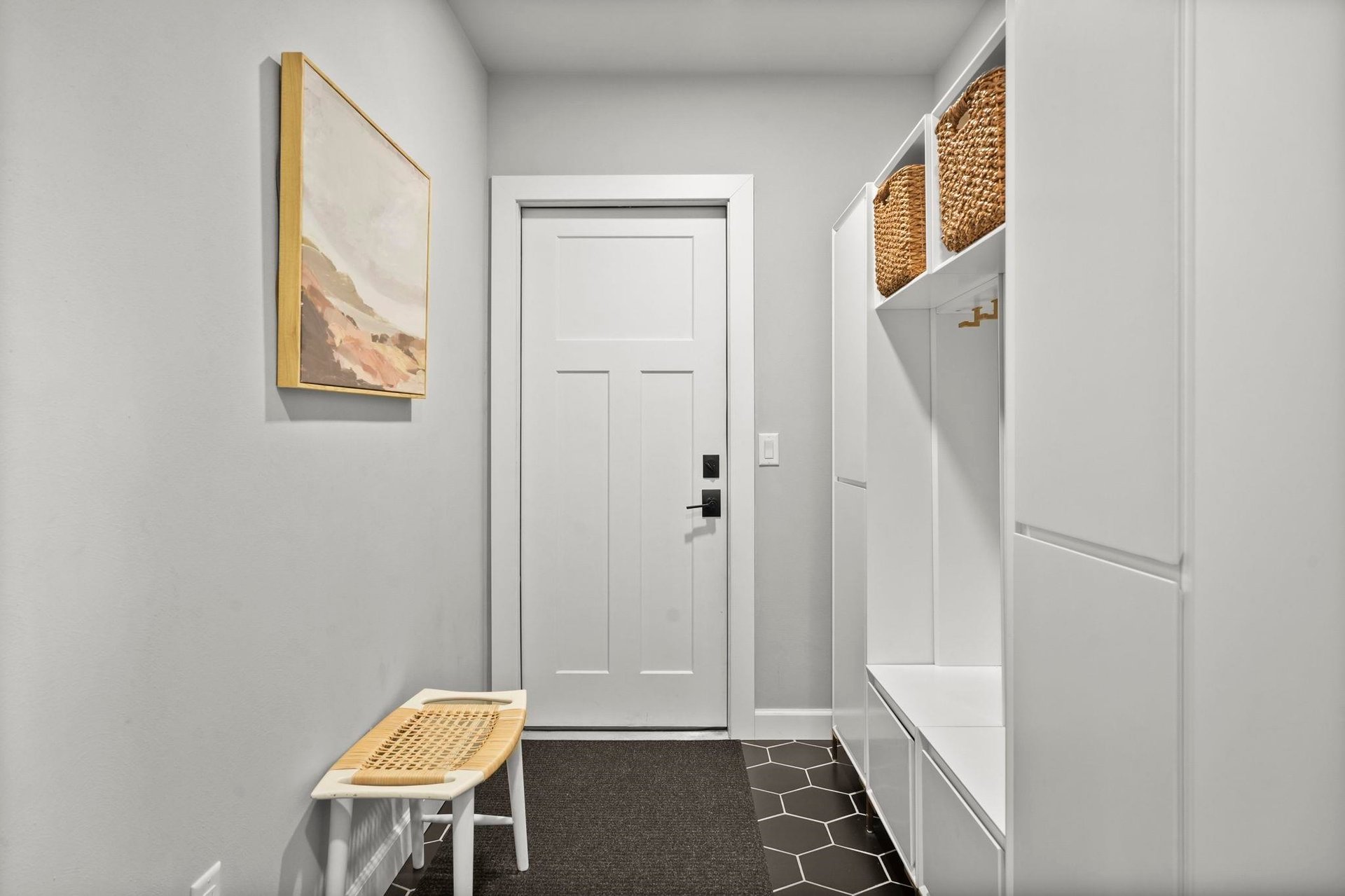
Picture arriving with groceries while someone else is putting on boots. There should be space to open the door, set things down, and move into the house.
A bench can make footwear changes easier, but it needs to leave enough room for the walkway and door swing. Check the space with coats hanging and boots in place, not just when it’s empty.
Keep mats flat and clear of the door. Use mats suited to your flooring, and clean up tracked-in water, grit, and salt promptly.
Make a small entry work
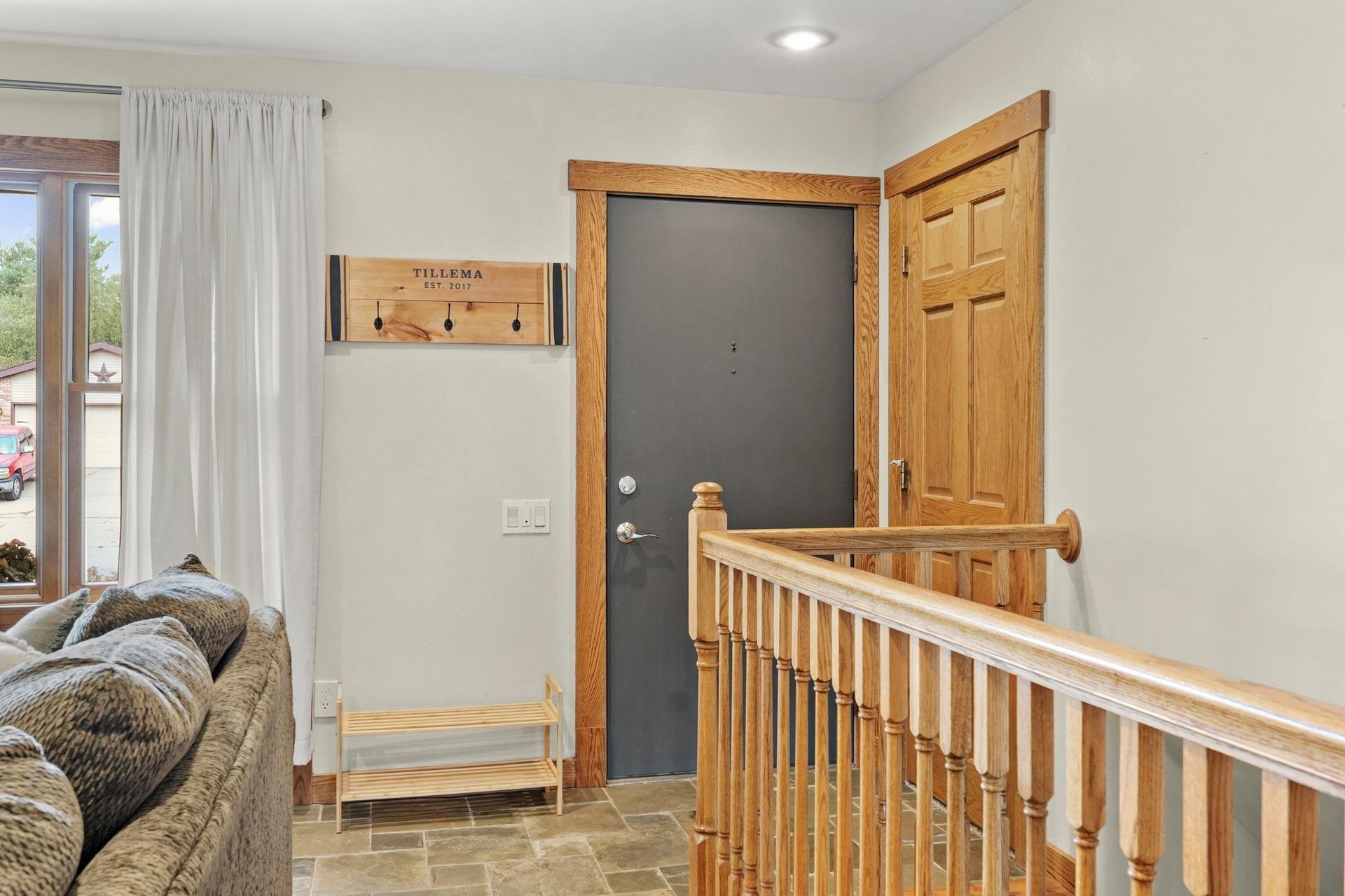
A separate room isn’t necessary. A short stretch of wall, part of an entry closet, or a corner near the door may be enough.
Start with a place for wet footwear, a few hooks, and somewhere for small essentials. Add seating only if it fits comfortably.
Use wall or closet storage where it leaves the walking route clear. Check that shelves and hooks don’t interfere with opening doors or hanging longer coats.
Rotate what you keep by the door
Wisconsin’s seasons change what needs to be within reach. Winter boots and snow pants take up different space than rain jackets, sandals, or gardening shoes.
Move clean, fully dry seasonal items elsewhere when you stop using them. Keep what you’re wearing now easy to reach, and leave some spare room for a wet coat or an extra bag.
The easier it is to hang a coat or put away boots, the more likely the space is to stay usable. Start with the items that land by your door every day, then give each one a practical place.
Explore more of Madison
Get to know Madison’s neighborhoods and find resources for your next move.
Explore Madison Neighborhoods
Check our Relocation Guide
Schedule a Call with Cait