Your Roof, Your Insurance, and the Fine Print Nobody Reads
Your roof is fine. But do you know what your policy would actually pay if a hailstorm took it?
Most of us treat homeowners insurance like a utility bill. It renews, we pay it, we move on.
Meanwhile, something has been shifting quietly underneath us. Insurance companies have been changing how they cover roofs, and most homeowners will not find out until the worst possible moment, which is after a storm.
This is not a scary story. It is a five-minute homework assignment that could matter enormously someday.
Why this is happening in Wisconsin
We are a hail state. Roughly 65 percent of Wisconsin homeowners insurance claims in a recent year were weather-related, and hail is the most common cause. Add heavier storms, longer storm seasons, and freeze and thaw cycles that work on a roof year after year.
At the same time, the cost of repairing and rebuilding a home has climbed steeply. Materials cost more. Labor costs more. So when insurers pay a roof claim, they pay considerably more than they used to.
A Madison-area agent said it plainly this spring. Rates went up because of the sheer volume of storms, and along with the higher premiums came a big change in coverage. That second part is the part almost nobody notices.
The change most homeowners miss

Here is the distinction worth understanding, and it comes down to two sets of initials.
Replacement cost coverage pays to put a new roof on your house, regardless of how old the old one was. Actual cash value, or ACV, pays what your roof was worth at the moment it was damaged, which means the payout is reduced for age.
The difference is not academic. Picture a $20,000 roof that is fourteen years into its life. Under replacement cost, you are looking at a new roof. Under actual cash value, you might receive something in the neighborhood of $8,000, minus your deductible, and the rest is yours to cover.
Carriers have been shifting older roofs from replacement cost to actual cash value. It often shows up quietly at renewal, in paperwork most people skim.
The deductible surprise
While you are looking, check the deductible too, because that has been changing as well.
Many Wisconsin policies now carry a separate wind and hail deductible, and it is frequently written as a percentage of your dwelling coverage rather than a flat dollar amount. One or two percent sounds small until you do the math on a house. On a $500,000 home, a one percent deductible is $5,000. Two percent is $10,000. That is what you would pay before the insurance pays anything.
By some industry estimates, only a small fraction of homeowners can tell you their deductible and how their roof is covered. It is worth being in that group.
Your roof's age is now underwriting data
The other shift is how insurers look at your roof in the first place.
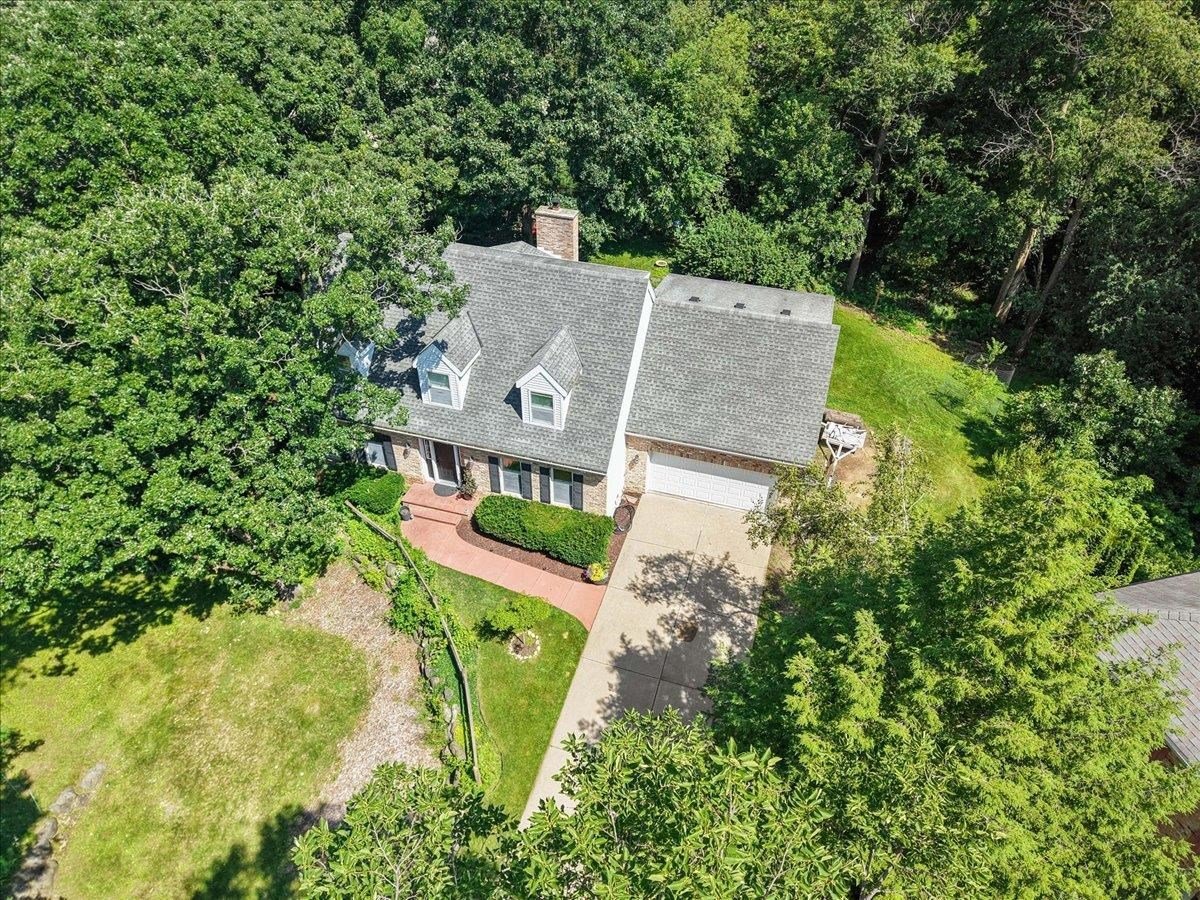
Carriers have leaned into satellite imagery, drone photos, and automated tools to assess roof condition. They are not waiting for you to file a claim. They can evaluate the roof from above, and roof age has become a real factor in whether a policy gets renewed at all, or renewed on tighter terms.
Asphalt shingles, which cover most Madison homes, are typically expected to last somewhere in the fifteen to thirty year range depending on the type. As a roof moves through that window, more carriers start asking for inspections, shifting to actual cash value, or declining to renew.
That means a roof that looks fine from the street can still be a problem in an underwriting file.
What to actually do about it
None of this requires panic, and it definitely does not mean you need a new roof today.
Find out how old your roof is. Check your inspection report from when you bought, look for a permit, or ask the previous owner. Then pull out your policy, or call your agent, and ask two direct questions. Is my roof covered at replacement cost or actual cash value? And what is my deductible, including any separate wind and hail deductible?
Then keep up the basics, because they genuinely matter. Clean the gutters. Trim branches away from the roof. Replace missing shingles. A documented, maintained roof is easier to insure and easier to defend at claim time.
If you are buying, ask the roof's age during your inspection period and call your insurance agent before you are fully committed. If you are selling, an older roof is worth thinking through with your agent ahead of time, because it can affect a buyer's ability to insure the home, which affects their loan.
Frequently asked questions
Can my insurer really drop me because of my roof's age?
Carriers do use roof age as an underwriting factor, and it can lead to inspections, coverage restrictions, or non-renewal, even without a leak. Rules and practices vary by company, so ask yours directly.
What is the difference between replacement cost and actual cash value?
Replacement cost pays to install a new roof. Actual cash value pays the depreciated value, reduced for the roof's age. On an older roof, the gap between the two can be many thousands of dollars.
Why do I have a separate wind and hail deductible?
Because hail is the leading source of claims here. Many Wisconsin policies now use a percentage of dwelling coverage rather than a flat amount, so the number can be far larger than people expect.
Does filing a claim reset my roof's age?
Not usually. A patch or partial repair generally leaves the roof treated as the original system. A full, permitted replacement is typically what resets it in an insurer's eyes.
How old is too old for an asphalt roof?
It depends on the shingle type and the carrier. Expected life generally falls in the fifteen to thirty year range, and scrutiny tends to increase as a roof gets deeper into that window. Your agent can tell you where your carrier draws the line.
Not sure where your roof or your coverage stands?
This is one of those quiet things worth knowing before you need to know it. Whether you are buying, selling, or just staying put, I am happy to talk through how a roof factors into the picture and point you toward trusted local inspectors and agents.
Read the Madison Homeowners Insurance Guide
Schedule a Call with Cait
Discover What Your Home Is Worth
General information for Wisconsin homeowners. It is not insurance advice. Coverage terms, deductibles, and underwriting practices vary by carrier and change over time. Claim and premium context referenced from the Wisconsin Office of the Commissioner of Insurance and Wisconsin insurance industry reporting. For your specific policy, talk with a licensed insurance agent.